Pakistan celebrates something in almost every month of the year. Kite festivals in Lahore, polo matches at 12,000 feet, food festivals in Karachi, and centuries-old Sufi urs gatherings in Sindh and Punjab.
This guide lists the biggest and most loved festivals in Pakistan for 2026 — with real dates, cities, and practical tips for each. It is written for anyone who wants to attend, photograph, or simply know what is happening and when.
Key takeaways
- Most 2026 festivals are already done, but two are still ahead: Lok Mela in Islamabad (dates TBA, usually early–mid November) and the Choimus winter festival in Kalash (expected December 15–22).
- Basant returned legally to Lahore in 2026 (February 6–8) for the first time since 2007, under strict safety rules. 2027 dates have been announced but changed before, so treat them as TBA.
- Eid-ul-Fitr was March 21 and Eid-ul-Azha was May 27, 2026 — the two biggest nationwide festival seasons.
- Entry to most cultural festivals is free or costs very little. The real cost is travel and hotels, so book early for Shandur, Kalash, and Hunza.
- Festival dates marked TBA below are not officially announced yet. We will update this calendar as organizers confirm them.
Table of contents
- Festivals in Pakistan 2026: The Complete Calendar
- Winter Food Festivals (January)
- Spring Festivals (February–April)
- Summer Festivals (May–August)
- Autumn Festivals (September–November)
- December: Choimus, the Kalash Winter Festival
- How to Plan Your Festival Year
- Frequently Asked Questions
- Conclusion
Festivals in Pakistan 2026: The Complete Calendar
The biggest festivals in Pakistan in 2026 include Karachi Eat in January, Basant in Lahore in February, the National Horse and Cattle Show in March–April, Chilam Joshi in Kalash in May, the Shandur Polo Festival in June, two major Sufi urs in July–August, Lok Mela in Islamabad in November, and the Choimus winter festival in December. Dates that are not officially confirmed are marked TBA.
| Festival | Where | 2026 Dates | Status |
|---|---|---|---|
| Karachi Eat | Karachi | Early January 2026 | Held |
| Basant | Lahore | February 6–8 | Held |
| Sibi Mela | Sibi, Balochistan | February (exact dates TBA) | TBA |
| Eid-ul-Fitr | Nationwide | March 21 | Held |
| National Horse & Cattle Show | Lahore | March 28 – April 18 | Held |
| Lahore Eat / Islamabad Eat | Lahore / Islamabad | TBA | TBA |
| Chilam Joshi | Kalash valleys, Chitral | May 13–17 | Held |
| Eid-ul-Azha | Nationwide | May 27 | Held |
| Shandur Polo Festival | Shandur Pass, Chitral | June 11–13 | Held |
| Urs of Shah Abdul Latif Bhittai | Bhit Shah, Sindh | July 29–31 | Held |
| Urs of Data Ganj Bakhsh | Data Darbar, Lahore | August 2–4 | Held |
| Silk Route Festival | Hunza, Gilgit-Baltistan | TBA | Announced but not officially confirmed |
| Lok Mela | Lok Virsa, Islamabad | November (dates TBA) | TBA |
| Choimus | Kalash valleys, Chitral | December 15–22 (expected) | TBA |
Winter Food Festivals (January)
Pakistan’s festival year opens with food. Karachi’s winter is the country’s unofficial festival season — cool evenings, open-air venues, and Karachi Eat, the most famous food festival in Pakistan, drawing lakhs of visitors over a single weekend. Lahore Eat and Islamabad Eat, run by the same organizers, bring the same food-and-music format to Punjab and the capital.
Karachi Eat
Karachi Eat is Pakistan’s best-known food festival, held every January in Karachi. Dozens of stalls from the city’s restaurant scene set up in one outdoor venue for a full weekend of eating, live music, and concerts.
The 2026 edition took place in early January 2026 and featured a live concert by Hassan Raheem on the final night, along with the usual mix of Karachi’s famous street food, new restaurant launches, and family crowds. It is organized by the same team behind the Eat festival brand (CKO Events), which has also run editions in Lahore and Islamabad.
Where: Karachi (venue changes year to year; recent editions used open grounds in the Clifton/DHA side of the city)
When: Every January; the 2027 dates are TBA
What to expect: 50+ food stalls, live music concerts in the evening, big crowds, and entry tickets that usually cost a few hundred rupees. Go on Friday evening or Sunday afternoon to avoid the worst Saturday rush.
Karachi’s food culture runs deep — and it is not limited to festivals. If Karachi’s food scene impresses you, take a look at our guide to the best wedding venues in Karachi, where the city’s famous hospitality shows up in another form.
Lahore Eat and Islamabad Eat
Lahore Eat and Islamabad Eat are the sister editions of Karachi Eat, run by the same organizers. Lahore’s edition usually happens in spring, while Islamabad’s edition has traditionally been held in November at the Jinnah Convention Centre.
Where: Lahore (usually an expo/open ground venue) and Islamabad (Jinnah Convention Centre)
When: 2026 dates are TBA for both cities
What to expect: The same format as Karachi Eat — food stalls, music, family activities — adapted to each city’s restaurant scene. Watch the organizers’ social pages for date announcements, since these editions are confirmed late.
Spring Festivals (February–April)
Spring is Pakistan’s busiest festival season. Basant fills Lahore’s skies with kites for the first time in nearly twenty years, Sibi hosts one of the oldest livestock fairs in the country, and the National Horse and Cattle Show celebrates Punjab’s rural heritage for three full weeks. Eid-ul-Fitr adds the year’s biggest nationwide celebration, turning late March into a full holiday season.
Basant, Lahore
Basant is Lahore’s legendary spring kite festival — and its status has changed dramatically. After being banned in 2007 following deaths caused by sharp, chemical-coated kite strings and celebratory gunfire, Basant returned legally in 2026 for the first time in nearly two decades.
The Punjab government allowed Basant 2026 from February 6 to 8 in Lahore under the Punjab Regulation of Kite Flying Act 2025, with strict conditions: only cotton string with no more than nine threads, no metal or nylon strings, kites no larger than 35 inches, and over 2,000 registered vendors selling QR-coded products. The government distributed over one million safety rods free to motorcyclists and deployed more than 4,000 police personnel across the city.
Where: Lahore (city limits only; kite flying outside notified days remains illegal)
When: February 6–8, 2026 (held). Basant 2027 dates are TBA. They have already changed twice, so treat them as TBA until confirmed.
What to expect: Rooftop kite flying, yellow-themed parties, special Basant menus in restaurants, and heavy traffic in the old city. A note of honesty: the Punjab Home Department later told the Lahore High Court that at least 17 people died during the 2026 festival despite the precautions. Basant is beautiful, but only fly with legal string and never from a moving vehicle.
Sibi Mela, Balochistan
Sibi Mela is one of the oldest festivals in Pakistan, held every February in Sibi, about 160 km southeast of Quetta near the mouth of the Bolan Pass. Its roots go back to the 15th century, when it began as an annual tribal jirga combined with a livestock fair — tribes from Balochistan, Sindh, Punjab, and Khyber Pakhtunkhwa still gather with their animals.
Where: Sibi, Balochistan
When: Every February. The 2026 edition was planned for the first week of February, but exact dates were not publicly confirmed — marked TBA.
What to expect: Horse and cattle shows, tent pegging (neza bazi), camel races, folk dances, handicraft bazaars, and a working livestock market where thousands of camels, cattle, and goats change hands. Sibi is very hot even in February, so carry water and sun protection.
Eid-ul-Fitr
Eid-ul-Fitr, marking the end of Ramadan, is the biggest festival in Pakistan — celebrated in every city, town, and village. In 2026 it fell on Saturday, March 21, confirmed by the Ruet-e-Hilal Committee after the Shawwal moon sighting. It lined up with Pakistan Day (March 23) to create a rare three-day holiday weekend.
Where: Nationwide — with the biggest chaand raat bazaars in Lahore (Ichhra, Anarkali), Karachi (Tariq Road, Hyderi), and Islamabad (Jinnah Super)
When: March 21, 2026 (held)
What to expect: Eid prayers in the morning, family visits, eidi for children, and three days of dawats. Markets stay open late on chaand raat (the night before Eid) for last-minute shopping. Eid holidays are also peak wedding-booking season in Pakistan — families use the break to finalize venues, so see our guide to the best wedding venues in Lahore if you are planning ahead.
National Horse & Cattle Show, Lahore
The National Horse and Cattle Show is Punjab’s grandest celebration of rural heritage, held at Fortress Stadium and Jilani Park in Lahore. Revived in 2025 after a multi-year gap, the 2026 edition ran for 22 days from March 28 to April 18.
Where: Fortress Stadium and Jilani Park, Lahore
When: March 28 – April 18, 2026 (held)
What to expect: The opening ceremony at Fortress Stadium, grand float parades along major Lahore roads (March 28 – April 11), tent pegging, horse dancing, camel dances, livestock exhibitions with prized breeds from across Pakistan, folk music, a vintage car and motorcycle show at Lahore Polo Club, a circus at Jilani Park, and a food and music festival with a fashion showcase (April 10–12). Entry to the grounds is usually free or nominally priced; the real draw is simply walking through and watching.
Summer Festivals (May–August)
Summer is when Pakistan’s festivals move to the mountains and the shrines. The Kalash spring celebration fills Chitral’s valleys with dance, freestyle polo is played at the world’s highest polo ground at Shandur, and the year’s two great Sufi urs gatherings draw millions of devotees to Bhit Shah and Lahore. Eid-ul-Azha in late May adds the second nationwide festival of the year.
Chilam Joshi, Kalash Valleys
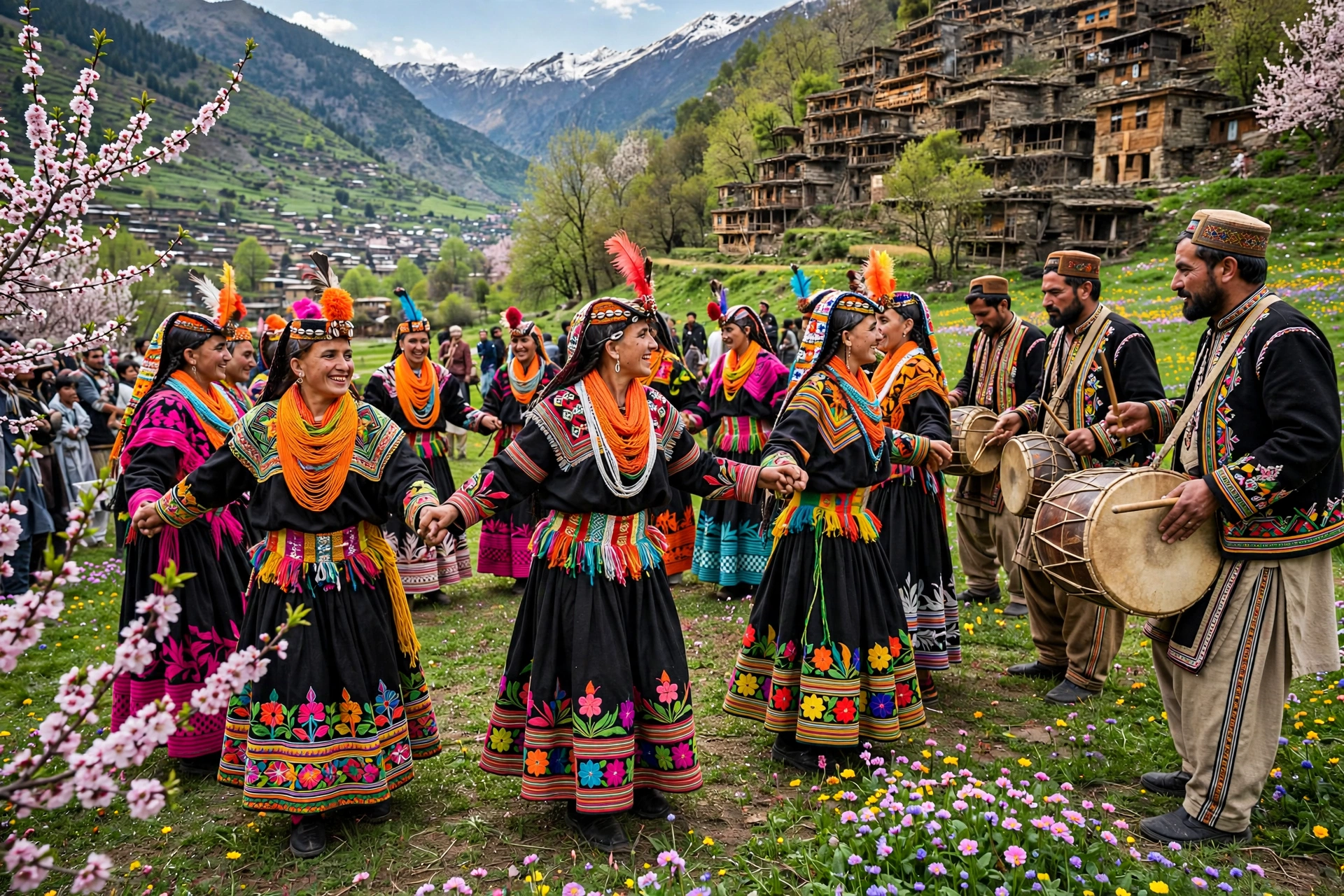
Chilam Joshi is the spring festival of the Kalash people, one of Pakistan’s most colorful cultural events. The Kalash are an ancient community of about 4,000 people living in three valleys of Lower Chitral — Bumburet, Rumbur, and Birir — with their own language, dress, and pre-Islamic traditions.
The 2026 festival ran from May 13 to 17, confirmed by the Khyber Pakhtunkhwa Tourism Authority. It opened with the Chirik Pipi ritual in Rumbur Valley — the symbolic drinking and sharing of milk for purity and unity — followed by days of decorated cattle sheds, walnut bread sharing, and circle dances to traditional drums, ending with a final celebration in Bumburet Valley.
Where: Bumburet, Rumbur, and Birir valleys, Lower Chitral, Khyber Pakhtunkhwa
When: May 13–17, 2026 (held). It happens every mid-May.
What to expect: Traditional black embroidered dresses with cowrie-shell headdresses, drum-led dances, walnut-based bread, mulberry wine shared in the celebrations, and large numbers of domestic and foreign tourists. Tourism police are deployed along the route from Lowari Tunnel to the valleys. Book guesthouses in Bumburet weeks ahead — they fill up fast.
Eid-ul-Azha
Eid-ul-Azha, the festival of sacrifice coinciding with Hajj, was celebrated on Wednesday, May 27, 2026, confirmed by the Ruet-e-Hilal Committee. The federal government declared three public holidays (May 26–28) for the occasion.
Where: Nationwide — with famous cattle mandis in Karachi (Northern Bypass), Lahore (Shahpur Kanjran), and Islamabad (I-12)
When: May 27, 2026 (held)
What to expect: Qurbani on the first three days, meat distribution to family and the poor, and the weeks before Eid dominated by cattle markets that are festivals in themselves. Like Eid-ul-Fitr, this is a peak period for family events and weddings — if you are scouting locations, our guide to the best wedding venues in Karachi covers the city’s top halls and marquees.
Shandur Polo Festival
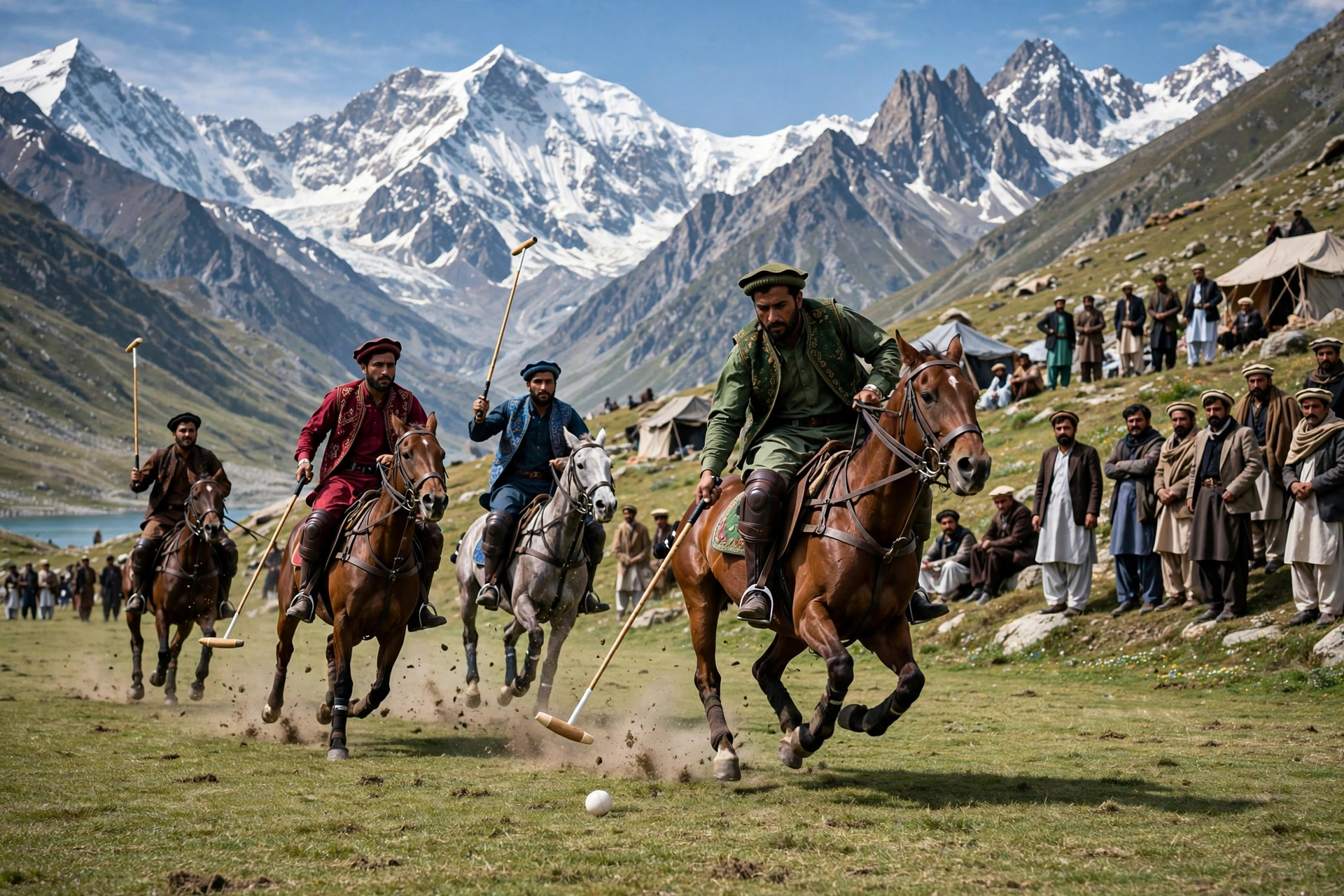
The Shandur Polo Festival is played at the world’s highest polo ground — about 12,200 feet above sea level at Shandur Pass, between Chitral and Gilgit-Baltistan. The 2026 festival ran from June 11 to 13, announced by the Khyber Pakhtunkhwa government, with the traditional freestyle polo rivalry between Chitral and Gilgit-Baltistan teams as the centerpiece.
Unlike regulated polo, the Shandur version is freestyle — minimal rules, fast and physical, played the way mountain communities have played it for generations. The festival dates back to 1936. Around the matches there are folk music and dance performances, bonfire nights, paragliding, and a full tent-village atmosphere shared by locals and tourists.
Where: Shandur Polo Ground, Shandur Pass, Upper Chitral
When: June 11–13, 2026 (held). Usually held in June–July; 2027 dates are TBA.
What to expect: Three days of polo, cultural shows, camping under the stars, and serious altitude. Nights are freezing even in June — carry proper warm clothing. There are no hotels at the ground itself; visitors camp in tents or stay in Chitral town (about 5–6 hours away) and Gilgit. Book transport and tents well in advance, and carry cash — there are no ATMs.
Urs of Shah Abdul Latif Bhittai, Bhit Shah
The urs of Shah Abdul Latif Bhittai — Sindh’s most beloved Sufi poet, author of the Shah Jo Risalo — is one of the biggest religious and cultural gatherings in Sindh. The 283rd urs was held from July 29 to 31, 2026 (14–16 Safar), and the Sindh government declared a province-wide public holiday on July 29.
Where: The saint’s shrine and the Shah Abdul Latif Bhittai Auditorium, Bhit Shah, Matiari District, Sindh
When: July 29–31, 2026 (held). Every year on 14–16 Safar.
What to expect: Mehfil-e-sama and raag programs with folk and classical artists performing Shah Latif’s poetry, literary conferences, poetry marathons (mushairas), Quran recitation, and the shrine decorated with lights. Thousands of devotees attend from across Pakistan. The district administration sets up medical camps, drinking water points, and a traffic plan — follow the marked routes.
Urs of Data Ganj Bakhsh, Lahore
The urs of Hazrat Ali Hajveri (RA), known as Data Ganj Bakhsh — the 11th-century Persian Sufi scholar who settled in Lahore and spread Islam in the region — is Lahore’s largest spiritual gathering. The 983rd annual urs was held from August 2 to 4, 2026 (18–20 Safar) at Data Darbar, inaugurated with the traditional chadar-laying ceremony by Deputy Prime Minister Ishaq Dar. The Punjab government declared a local holiday in Lahore district on August 4.
Where: Data Darbar complex, Lahore
When: August 2–4, 2026 (held). Every year on 18–20 Safar.
What to expect: Mehfil-e-sama (Sufi music gatherings), special prayers, milk sabeels, art exhibitions, and millions of devotees over three days. Security is heavy — walk-through gates, metal detectors, and traffic diversions around the shrine. The shrine area gets extremely crowded in the evenings; morning visits are calmer. Clinics on wheels and rescue help desks are stationed around the venue.
Autumn Festivals (September–November)
Autumn belongs to the north and to Islamabad. The Silk Route Festival celebrates the heritage of the old trade corridor through Gilgit-Baltistan, while Lok Mela — Pakistan’s national folk festival — is still to come in November, with official dates yet to be announced.
Silk Route Festival, Gilgit-Baltistan
The Silk Route Festival celebrates the living heritage of the ancient Silk Road trade route that once connected China, Central Asia, and South Asia through the Karakoram. It is usually held in September–October in Hunza (Gulmit, Gojal), Gilgit, and Skardu, with artisans, folk dancers, and musicians performing across the region.
For 2026, organizers announced an International Silk Route Festival on October 24–25, promoted through a roadshow at the Pakistan High Commission in London. The Gilgit-Baltistan tourism department had not officially confirmed these dates at the time of writing — so this one is marked announced but not officially confirmed; check with PTDC or the GB tourism department before booking travel.
Where: Gulmit (Gojal, Upper Hunza), Gilgit, and Skardu
When: TBA (announced but not officially confirmed); traditionally mid-September to mid-October
What to expect: Artisans at work in decorated pavilions, folkloric song and dance ensembles (including performers from neighboring Xinjiang), craft bazaars, food and fruit fairs with Hunza’s famous dried apricots, polo matches, and camping villages. Autumn colors in Hunza make this one of the most photogenic festivals of the year. Hotels in Hunza book out months ahead in autumn.
Lok Mela, Islamabad
Lok Mela — the Lok Virsa folk festival — is Pakistan’s national celebration of folk culture, organized every year by Lok Virsa, the National Institute of Folk and Traditional Heritage. For ten days, the Shakarparian grounds become a miniature Pakistan: around 500 artisans, folk musicians, dancers, and cooks from Punjab, Sindh, Khyber Pakhtunkhwa, Balochistan, Gilgit-Baltistan, and Azad Jammu and Kashmir, plus an international pavilion that hosted participants from 12 countries in 2025.
Where: Lok Virsa Complex, Garden Avenue, Shakarparian, Islamabad
When: November 2026 — dates TBA. The 2025 edition ran November 7–16 and the 2024 edition November 8–17, so expect early to mid-November. Follow Lok Virsa’s official channels for the announcement.
What to expect: Provincial cultural pavilions, live artisan demonstrations (pottery, stone carving, embroidery), a craft bazaar for ajrak, shawls, and camel-skin lamps, folk cuisine including Balochi sajji, puppet shows, kids’ corners, and open-air concerts. Entry is usually free or nominally priced — confirm at the gate. Weekday mornings are the calmest; weekends get very crowded. This is the best single place in Pakistan to buy authentic handicrafts directly from the makers.
December: Choimus, the Kalash Winter Festival
Choimus is the Kalash winter solstice festival — the third and final festival of the Kalash year after Chilam Joshi (spring) and Uchal (August). Held during the darkest days of winter, it centers on purification rituals, bonfires, and prayers for prosperity in the coming year.
Where: Bumburet, Rumbur, and Birir valleys, Lower Chitral
When: December 15–22, 2026 (expected) — the festival traditionally runs for about a week around the winter solstice. Exact 2026 dates are TBA; confirm locally before traveling.
What to expect: Torch-lit processions, traditional dances, ritual sacrifices, and a deeply spiritual atmosphere very different from the tourist-heavy spring festival. Winter in Chitral is harsh — roads can close with snow, so travel with an experienced operator and check conditions before setting out. Fewer tourists means a more authentic experience for those who make the journey.
How to Plan Your Festival Year
A few practical rules that apply to almost every festival on this list:
- Book travel early for the north. Shandur, Kalash, and Hunza have limited hotels and guesthouses. For June–September festivals, book at least 6–8 weeks ahead. Tour operators from Islamabad and Lahore run festival-specific packages.
- Carry cash. ATMs are scarce or absent in Shandur, Kalash valleys, Sibi, and rural Hunza. Mobile signals are patchy too, so digital payments may not work.
- Check the weather and the roads. Babusar Top, Lowari Tunnel, and the Shandur road close or get dangerous in bad weather. The KP Tourism Authority and GB tourism department post updates during festival season.
- Respect local customs. At Sufi urs gatherings, dress modestly and keep voices low near the shrine. In Kalash valleys, ask before photographing people — especially women. At Basant, fly only legal string and never from rooftops near power lines.
- Recheck TBA dates before you book. Festival dates in Pakistan shift with the moon (Eids, urs), government decisions (Basant), and organizer announcements (Lok Mela, Eat festivals). Bookmark this page — we update it as dates are confirmed.
Frequently Asked Questions
What is the biggest festival in Pakistan?
The biggest festival in Pakistan is Eid-ul-Fitr, celebrated nationwide by the entire country with public holidays, family gatherings, and special prayers. Among cultural festivals, Lok Mela in Islamabad draws the largest crowds, while Basant in Lahore is the most famous city festival, returning legally in 2026 after a nearly 20-year ban.
When is Lok Mela 2026?
Lok Mela 2026 dates have not been officially announced yet. The festival is organized by Lok Virsa at Shakarparian, Islamabad, and is usually held for ten days in early to mid-November — the 2025 edition ran November 7–16. Follow Lok Virsa’s official channels for the 2026 announcement.
Is Basant banned in Pakistan?
No, Basant is no longer fully banned. After being banned in 2007 over deaths from sharp kite strings and aerial firing, Basant was celebrated legally in Lahore from February 6–8, 2026, under the Punjab Regulation of Kite Flying Act 2025 with strict safety rules. However, kite flying outside the officially notified days remains illegal, and 2027 dates (announced as January 29 – February 7) have already changed twice, so they should be treated as unconfirmed.
What are the dates of Eid-ul-Fitr and Eid-ul-Azha in Pakistan in 2026?
Eid-ul-Fitr 2026 was celebrated on Saturday, March 21, and Eid-ul-Azha 2026 on Wednesday, May 27. Both dates were confirmed by Pakistan’s Ruet-e-Hilal Committee after official moon sightings. The federal government declared three-day public holidays for each Eid.
Which is the best food festival in Pakistan?
Karachi Eat is widely considered the best and biggest food festival in Pakistan, held every January in Karachi with 50+ food stalls, live concerts, and huge crowds. Its sister festivals, Lahore Eat and Islamabad Eat, run by the same organizers, bring the same format to Punjab and the capital, though their 2026 dates are still TBA.
How can I attend the Shandur Polo Festival?
To attend the Shandur Polo Festival, travel to Chitral or Gilgit and then by 4×4 jeep to Shandur Pass — the ground sits at about 12,200 feet, so there are no hotels and visitors camp in tents. Book transport, tents, and warm clothing well in advance, carry cash, and allow a day to acclimatize to the altitude. The 2026 festival was held June 11–13; 2027 dates are TBA.
Conclusion
From Karachi’s food streets to the polo ground at the roof of the world, Pakistan’s festival calendar covers every taste — food, music, sport, craft, and faith. Most 2026 festivals have already happened, but Lok Mela in November and Choimus in December are still ahead, and the full cycle starts again with Karachi Eat in January.
Did we miss a festival you love? Tell us in the comments. And if you are planning the family events that happen around these festivals — especially weddings in the Eid season — read our guides to the best wedding venues in Lahore and the best wedding venues in Karachi.
PakEvents will update this calendar as 2027 festival dates are officially announced. Last verified: 6 November 2026.
Get Event Updates
New guides and event news, straight to your inbox.
